Aeroponics Pump and Timer
by Danny Cook
(Athens, AL)
I'm in the process of installing a greenhouse (30 x 72) in which to grow vegetables for sale (tomatoes, cucumbers, and squash), particularly in the winter months. My first choice would be to go with Aquaponics, and have spent time at an aquaponics farm with which Auburn University is helping. However, I've determined that aeroponics would be better for me to get my feet wet, and then move into aquaponics.
So.....I'm going to build your homemade aeroponic system as a trial and need to know what pump and timer you suggest, along with the nutrients you suggest. I've read the optimum droplet size is 50 Micron. In your testing do you see this as critical? How big do you think the droplet size is with a 1/16th hole in the PVC? Thank you, Danny Cook.
Answer: Danny- The particular brand of pump you use for your aeroponic system is really irrelevant, as long as it is capable of producing the 40-60 psi necessary for pushing the nutrient solution through your system. It is also very important to use a manifold in a system like this, otherwise you will have 1/16th inch holes (your "spray nozzles") that do not get the proper amount of fluid pressure, and therefore do not spray properly.
There are many different manufacturers of suitable pumps for this type of application. One excellent choice is the TNC water pump (right), capable of providing adequate water pressure for up to 60 spray sites (and designed specifically for aeroponic systems). Good aeroponic pumps are always a little on the expensive side....this one costs nearly $200, and is available at Alternative Garden Supply. If you want a more affordable option, you will be able to find one with a little research. Simply find a pump with the same or very similar specs and you will probably be OK.
A good friend of mine bought one of these expensive pumps for a homemade hydroponic system, and burned it out the first time he ran it. He hadn't cleaned the system out very well before his trial run, and there were still many small PVC shavings in the tubes from the manufacturing process. If he had used an in-line filter in the system before the pump, it would have saved him $200! So, be sure to use one....and be sure your in-line filter is capable of working with pressures of 40-60 psi before you purchase it.
The most critical factor in aeroponics is the air. No nutrient absorption occurs except in the presence of Oxygen. The more Oxygen present in the root zone, the more hydroponic nutrients can be absorbed. This is part of the reason aeroponics produces such fast growth rates. The droplet size is largely irrelevant for a few reasons. First, any size water droplet has an extremely large surface area compared to the water surface area of any other hydroponic system (such as NFT, DWC, or even drip systems).
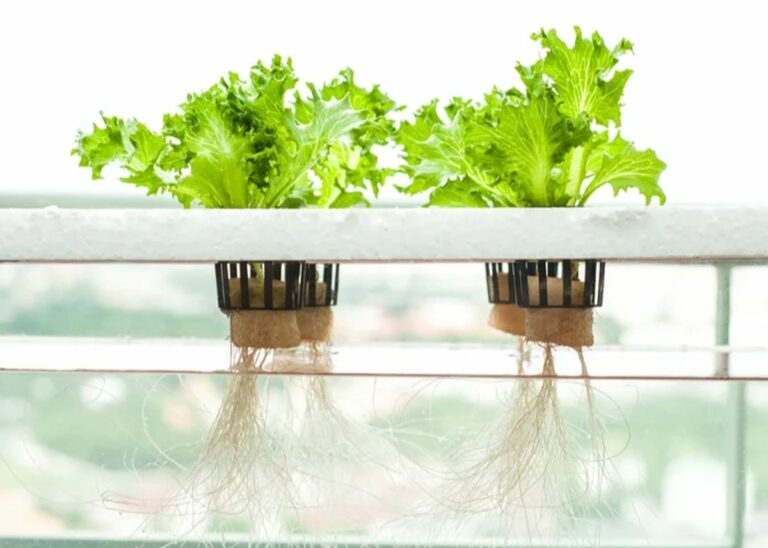
But that is not even the most compelling reason. In any aeroponic system, the roots of the plants hang in the air. The standard manufacture of aeroponic systems includes a pump timer that cycles one minute on, and four minutes off. This is known as a recycling timer. So, no matter what droplet size you end up producing, it is only relevant for one second (from the time the droplet exits the spray nozzle to the moment it impacts the roots, and is no longer a droplet).
After that point, all aeroponic systems are pretty much created equal. The roots hang in plain air for four minutes, coated with a thin layer of nutrient solution with maximum exposure to the Oxygen surrounding them. The benefit of having a particular droplet size for that one second (literally even less than one second) is very debatable....and even if there is some tiny benefit, it is only very, very small compared to all of the other considerations.
I cannot even guess at the micron size of the water droplets produced by this aeroponic system, but I firmly believe the point is moot. The droplets could be 200 microns and it would still make very little difference in the performance of the system, or in your end results. Mostly, this kind of talk is just advertising and marketing.
Finally, as with your choice of pump, your choice of nutrients is largely irrelevant. I have yet to come across a set of hydroponic nutrients that is not complete (providing all primary, secondary, and micro-nutrients), or not customizable (the amounts of N, P, and K can be adjusted in the formula to accommodate different crop types, and the strength of the nutrient solution can be controlled by simply adding more or less nutrients to the mix).
The most important thing is that you know what the specific nutritional requirements are for the crops you are trying to grow. This is especially important if you are growing two or more different crops together in the same aeroponic system. The other important thing is that you know how to maintain your nutrient solution properly. Personally, I have always liked B.C. Nutrients very much....the nutrients are particulate free, mixing them up properly is very easy to do, and the pH is very stable once they are in solution. I hope this helps you out Danny, and Happy Growing!