Home
Hydro Gardening
Hydro Systems
Homemade Hydro
How to Grow Hydro
Grow Light Tips
Garden Design
Exhaust Setup
Tips & Tricks
Organic Gardening
Plant Life Cycle
Grow Herbs
Grow Tomatoes
Pest Control
Troubleshooting
Site Blog
The Daily Feeder
Site Map
Ask the Expert
[?] Subscribe To This Site

XML RSS
Add to Google
Add to My Yahoo!
Add to My MSN
Subscribe with Bloglines

Aeroponics System Drainage

by Mack
(florida)

I was looking at your aeroponics system and I want to know how did you handle you drainage back to the reservoir.

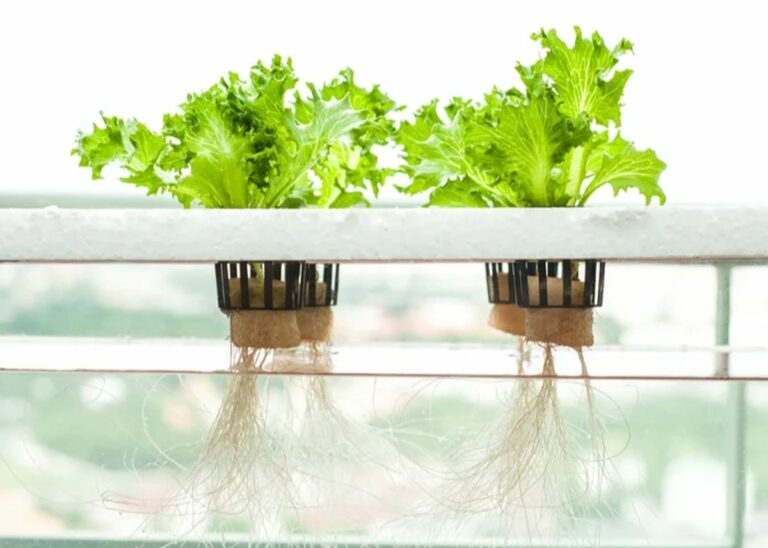
Answer: Mack- that depends on which aeroponics system you were checking out. For the aeroponics system pictured on this page, the plants are suspended above the nutrient reservoir, with the roots actually hanging down inside the reservoir. In this system, spray heads spray the nutrient solution into the air space all around the roots, and then it simply drips right back into the nutrient reservoir.

My aeroponics cloner works in a similar fashion. The cuttings are placed in neoprene collars, rubber dirt plugs, or pre-soaked rockwool plugs, and than suspended in the lid of the container above the nutrient reservoir (although I do not add any nutrients to root the clones, only a little B1).

Air stones in the reservoir create many tiny bubbles, which pop at the surface and fill the airspace just above the surface with a micro-mist. It is important to suspend the clones about one inch above the surface of the water in order to receive the right balance of moisture and air. Getting the cloning medium too wet will actually prevent root growth in the cuttings, which is why normal spray heads are not used in this particular system. As with the areoponics system above, any accumulation of water inside the chamber simply drips back into the reservoir.

Another system using a similar idea is my 5 gallon bucket system, which uses a low pressure pump and a section of hose with many holes to create a chamber for the roots. Simply cut a hole in the lid of the bucket to fit your netted pot and you're all set! Switching the plant between two different 5 gallon buckets will make nutrient solution changes a bit easier.

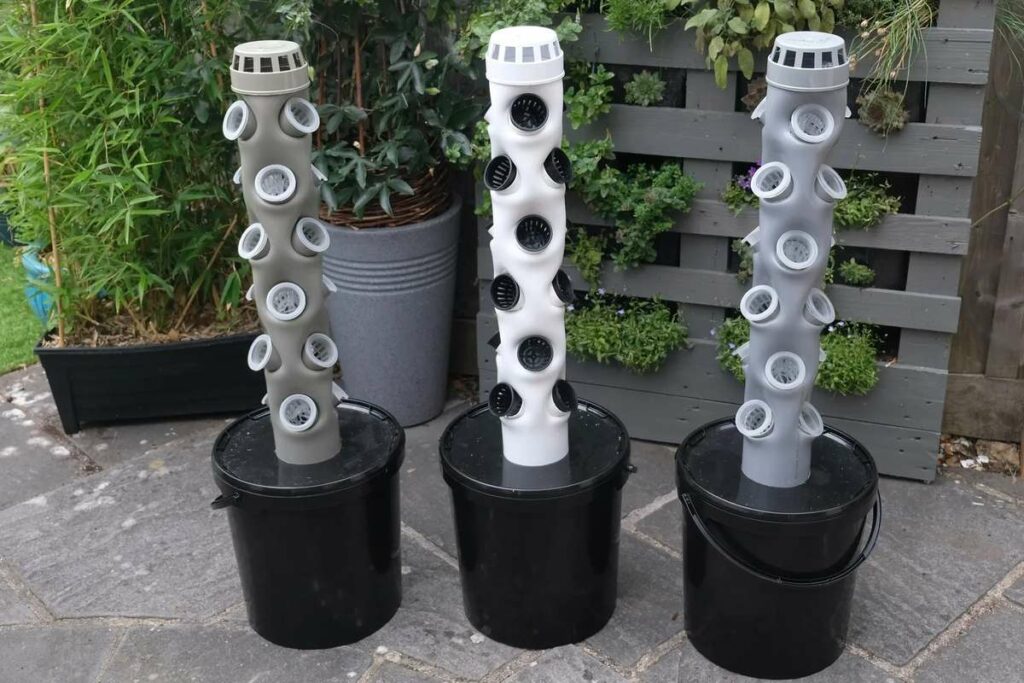
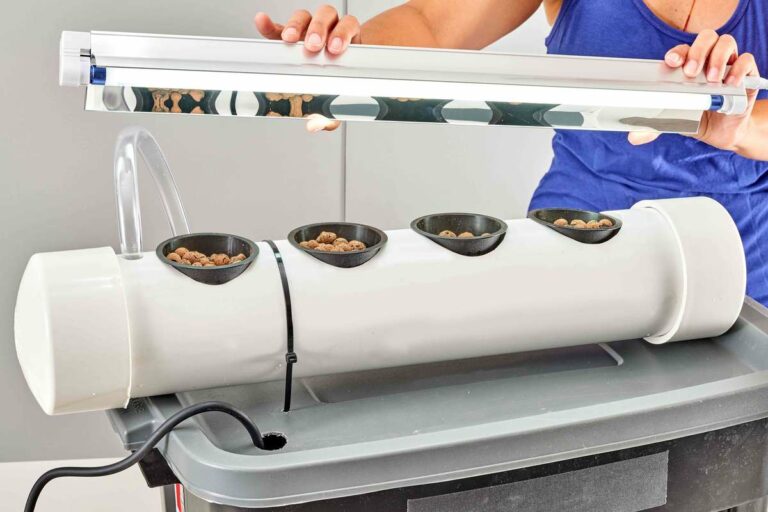
Finally, on this page here I have a homemade system where I actually used a high pressure pump (something I usually try to avoid). Although the picture on the page does not show it, holes should be cut in the lid of the nutrient reservoir. Each 4 inch PVC pipe has one end open, and each pipe is elevated at the other end to allow the water to drain back into the reservoir through the hole in the lid. If you want the system to run more neatly, you could probably add 90* elbows to the end of each pipe (pointing down) the help direct the water back into the reservoir.

Before building any homemade hydroponic system, I highly recommend reading about the common problems with many hydroponic systems. At times it is funny, and it will help you avoid many problems before you even begin!

Finally, with another visitor to my site I discussed design ideas for my next hydroponic gardening system, including a couple of improvements. One system I am considering is a re-designed hydroponic system. The other system is a brand new low pressure aeroponic design that incorporates my favorite easy-to-use features. As of this post, neither system has been written about on my site. If you like, you can read more about them here.

And as always, I hope this helps.

Click here to read or post comments.

Join in and write your own page! It's easy to do. How?
Simply click here to return to Ask the Hydroponic Gardening Expert
.


footer for hydroponics gardening page