Home
Hydro Gardening
Hydro Systems
Homemade Hydro
How to Grow Hydro
Grow Light Tips
Garden Design
Exhaust Setup
Tips & Tricks
Organic Gardening
Plant Life Cycle
Grow Herbs
Grow Tomatoes
Pest Control
Troubleshooting
Site Blog
The Daily Feeder
Hydro FAQ
Site Map
Ask the Expert
[?] Subscribe To This Site

XML RSS
Add to Google
Add to My Yahoo!
Add to My MSN
Subscribe with Bloglines

Cloning Questions

by David Spencer
(Mesa, Az)

You're article on the homemade cloning setup and the article on preparing the clones leave some questions: when putting 4 or 5 clones in a 1/2 gal milk jug, what keeps them from falling down into the jug? With the article on the cloning tub, you have 1/2 inch hanging out and in the article on preparing the clone you say to put them into a rockwool cube 1/2 inch from bottom. To prepare the clones for the cloning tub, would you still use the rockwool cubes? Can this be done all together, to use these two methods for you're cloning tub plans following the same procedure of both articles?

Answer: David- any clones you take should have a few side branches. When using the milk jug method, it is the side branches of the first clone that keeps it from falling down into the jug. Once you have three or four or five clones in the jug this becomes even less of a problem, as they support each other and there is not enough room in the 1 inch hole in the top of the milk jug for any of the clones to slip past the other clones and fall in. Once you have several clones in there, they just sit there like flowers in a vase.

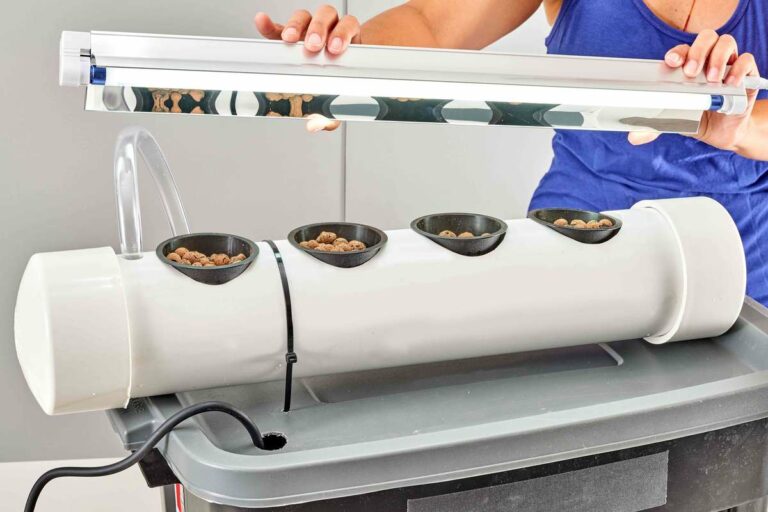
When I first wrote the article on the tub-style cloner, I had used perforated cups filled with expanded clay pellets for the grow medium. As you can imagine, a cup full of clay pellets leaves a lot of air spaces....which becomes a problem. The best way to get a clone to successfully root is to keep a moist surface in full contact with the whole surface of the stem where you are trying to grow the roots!

In the picture you refer to, I had to push my clones down through the clay pellets until the cut end of each clone just barely became submerged in the water sitting just below the "netted pots". This was to much of a pain in the butt, which caused me to make my first improvement to the system....which was to use rockwool plugs instead of clay pellets and to keep the cut end of each clone up inside the rockwool plug a little bit to guarantee the cut would seal properly and not get an air embolism.

It is important to note, in the milk jug method the clones are actually submerged in the water a little bit and left there a few days while they heal. They are than transferred into pre-moistened plugs and kept in a humidity dome until they begin to pop roots out. In the tub method the clones are suspended slightly above the water surface (already in the plugs), but kept moist by the rockwool plug and by the popping of all the little bubbles put off by the air stones. With the tub method, there is no need to disturb the clones until they have popped roots out.

If I understand your last question correctly, I hope this will give you a better idea of how to proceed. In my opinion the tub method is easier, tends to have fewer problems, and almost always produces a higher success rate.

I recommend using a 16 quart plastic storage container from a dollar store instead of using a big, plastic storage tote as I did. You can fit up to 40 clones in a container that size if you drill the holes in the lid right....the plastic storage tote I used on my first try was an overkill. Make sure to get a container with a FLAT lid- otherwise it is difficult to drill the holes in the top for the clone plugs. Buy a second 16 quart container to use as a humidity dome.

I have made one final improvement to the system. I use a bag of Rapid Rooter replacement plugs for the clones now instead of rockwool plugs. They have just the right moisture content right out of the bag, plus you never have to worry about pH problems (as you sometimes do with rockwool), and finally- they are inoculated with beneficial organisms that prevent pythium and encourage faster root growth. Since I have made this final change to my system, I have never gotten less than a 100% success rate when taking clones.

To achieve these same results yourself, make sure to always use a sharp, clean razor to take your clones. Always swirl your clones in some cloning gel after you cut them- it doesn't matter what brand, as long as it is gel. It is a good idea to wash your hands before taking any clones. Always remove the humidity dome once or twice a day to give the clones a little fresh air. Always mist them a little with a spray bottle whenever you are giving them fresh air. Use a 7/8 inch hole saw to cut the holes in your lid- this size fits the Rapid Rooter plugs well (and the rockwool plugs, too). Finally, make sure to put some fluorescent light directly over the cloner- you can even rest the light fixture right on the humidity dome if you want!

One final tip- I usually cut the Rapid Rooter plugs down the middle, so I can lay the clone in there and close the plug back around it. It causes less damage to the fragile cut end of the clone where your first roots are likely to grow from. I hope this helps you out Dave, and Happy Growing!

Click here to read or post comments.

Join in and write your own page! It's easy to do. How?
Simply click here to return to Misc Hydroponic Gardening Q&A
.


footer for hydroponics gardening page