Constitution of the Aeroponic Nutrient
by Senthil
(Bangalore, India)
I have done a bit of reading on aeroponics (with no real experience in agriculture) and it has got me very interested to experiment. However, my motivation comes from the fact that I am in India, with little or no knowledge or aeroponics in the country and I am at a point in my career where I am looking for a change.
Having read quite a bit of stuff on the web, I am still struggling to understand how the nutrient solution can be produced at home. I have only come across websites which seem to sell the nutrients in packets. However, I am keen to know how this can be produced on a larger scale at home.
To start my experiment, I would like to grow Tomatoes. Being in India, sunlight is in plenty and I would like to get this started outdoors.
Cheers, Senthil
Answer: Senthil- providing all of the nutritional requirements of your plants can be very complex. When growing plants in soil, the plants can obtain many of the substances from the soil....this makes soil gardening more forgiving. Often times soil gardeners can get away with providing just Nitrogen, Phosphorus, and Potassium and still have decent results.
When you grow plants using hydroponics (including aeroponics), the plants must be able to find everything they need in the water you provide. This means you must have a more complete picture of everything your plants are going to need. In addition to primary nutrients (Nitrogen, Phosphorus, and Potassium), your plants also require considerable amounts of secondary nutrients (Calcium, Magnesium, and Sulfur) and small amounts of many micronutrients (boron (B), copper (Cu), iron (Fe), chloride (Cl), manganese (Mn), molybdenum (Mo) and zinc (Zn)).
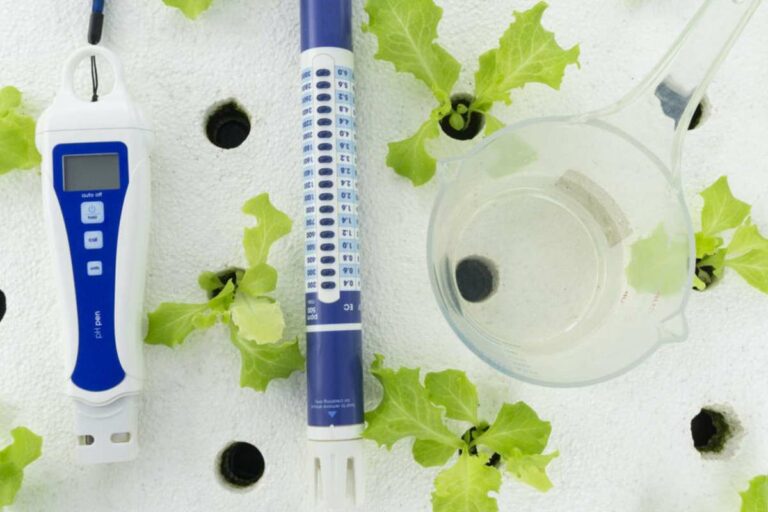
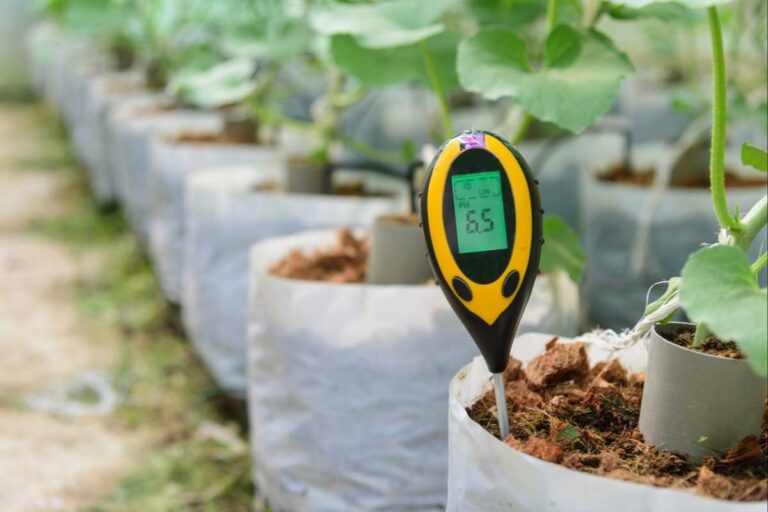
You will have to mix up a nutrient solution of the proper strength containing all of these nutrients in the proper proportions (that tomatoes require). Than you will have to test the nutrient solution strength and nutrient solution pH once a day and adjust it to keep it working properly.
A good place to begin would be to make a compost tea. Compost contains decent amounts of Nitrogen, Phosphorus, and Potassium (which will vary depending on what went into the compost), and is likely to contain most of the secondary nutrients and micronutrients as well. Seaweed additives, like kelp meal, contain nearly every micronutrient and would be an excellent addition to the tea- they will prevent any micronutrient deficiency and will also add some plant hormones to the tea.
Tomatoes need a lot of Calcium to produce well, and so it is a deficiency in Calcium that is most likely in your situation. Adding some bone meal to your tea would add both Calcium and Phosphorus to your solution....or you could possibly find a source for some Calcium Phosphate. I'm not too sure what else you could do for extra Calcium short of buying a professional nutrient additive like Cal-Mag.
The suggestions above will give you a good place to start, but will surely need some fine tuning. One last note....organic nutrient like these are almost sure to cause clogging if you are using a system with spray heads or spray nozzles. If this is the case, you will also want to use an in-line filter. I hope this helps!