Home
Hydro Gardening
Hydro Systems
Homemade Hydro
How to Grow Hydro
Grow Light Tips
Garden Design
Exhaust Setup
Tips & Tricks
Organic Gardening
Plant Life Cycle
Grow Herbs
Grow Tomatoes
Pest Control
Troubleshooting
Site Blog
The Daily Feeder
Hydro FAQ
Site Map
Ask the Expert
[?] Subscribe To This Site

XML RSS
Add to Google
Add to My Yahoo!
Add to My MSN
Subscribe with Bloglines

Homemade Hydroponic Nutrients

by Naveen
(Dubai)

I am a fresher to this concept, would like to grow beans, tomato, and some herbs. What's the best nutrient solution that can be home made, and what is the dosage required.

Answer: Naveen- this is a question I get quite a bit, actually. To start, let's go over a few problems you will have to confront. First, a hydroponic fertilizer needs to provide everything your plants need....Nitrogen, Phosphorus, Potassium, Calcium, Magnesium, Sulfur, Iron, Boron, Molybdenum, Chloride, Manganese, Copper, and Zinc.

Second, the ratio of these nutrients will be different for different crops. For example, your beans and tomatoes will do best with extra Phosphorus, while your herbs will do best with extra Nitrogen. Your nutrient strength is likely to be different for different crops also. For example, tomatoes and beans should be fed a "full strength" solution (about 1200 PPM), whereas your herbs would do very well on a 50% strength solution (about 700 PPM).

Third, you will need to have some way of testing the nutrient solution strength and the nutrient solution pH every day so you can maintain your nutrient solution properly. For testing the pH, you can either use an inexpensive pH test kit (a small, clear vial with dropper solution), or you can purchase a pH meter.

Testing your nutrient solution strength will be a little more difficult. Usually, you would use either a TDS meter (total dissolved salts) or an EC meter (electrical conductivity). These meters can be expensive. Also, these meters are more accurate measuring professional, chemical based hydroponic fertilizers than they are measuring organic based fertilizers. I guess many organic substances used by the plants as food do not show up as "fertilizer salts".

If you need to mix up your own fertilizer, a good place to start would be compost tea. No matter where you are, you can usually make up some kind of compost. Compost usually has a decent mix of N-P-K, usually has at least SOME Calcium, Magnesium, and Sulfur, and often has most of the micro-nutrients as well. If you can add some kind of seaweed to your compost tea, that would be most helpful. Products like liquid seaweed (MaxiCrop) and kelp meal contain many micro-nutrients and some plant hormones.

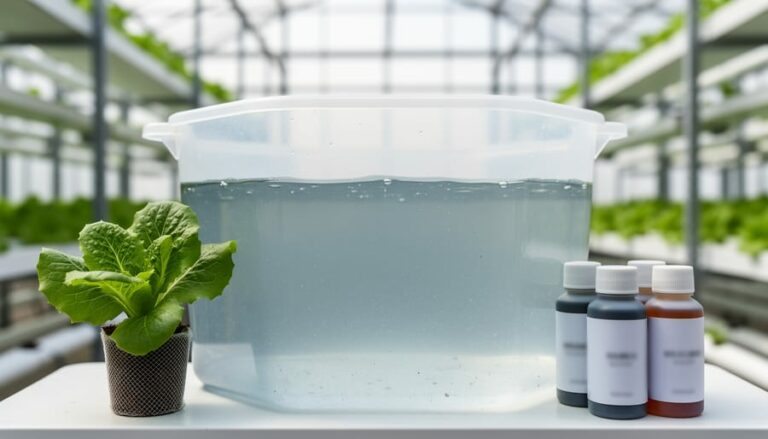
To brew compost tea, start with a pound or two of compost in a 5 gallon bucket. The compost can be placed in a sock or piece of t-shirt to keep most of the debris out of the water. It is beneficial to include an air bubbler in the bucket....beneficial micro-organisms will only increase in an aerobic environment.

To this, add any liquid seaweed or kelp meal you have....about 1/4 cup would be good for a 5 gallon batch. Finally, add about 1/4 cup of un-sulfured molasses to give the micro-organisms something to feed on. Raw sugar can be used in place of molasses if needed. Brew the mix for two days (or at the very least one). Shake the bag of compost every once in a while to make a nice, strong tea.

When you go to use the tea, you will want to dilute it some with plain water....simply test the nutrient solution strength with your meter to determine how much you need to dilute the solution (keeping in mind what crop you are feeding it to). This is a very basic recipe. For crops that prefer more Nitrogen, you will want to add a source of Nitrogen to the tea (such as composted horse manure or cow manure). Clean wood ash can be added for additional Phosphorus, but only in small amounts (wood ash can change the pH of your nutrient solution a lot).

Be sure to always check and adjust the pH of your nutrient solution whenever you check and adjust the nutrient solution strength. If you would like to read a little more about making up your own fertilizer, check out this post, where I describe a nutrient made mostly of worm castings, bird guano, and bat guano. I hope this help!

Click here to read or post comments.

Join in and write your own page! It's easy to do. How?
Simply click here to return to Hydroponic Nutrients Q&A
.


footer for hydroponics gardening page