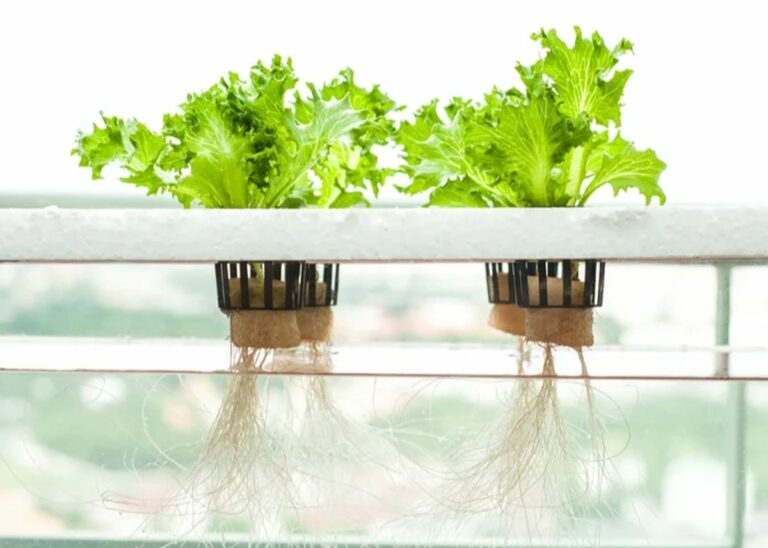
How to Grow Hydro / Hydroponics Feeding Tips
How to grow hydro is really about how to feed your plants. After all, there is nothing you can do to MAKE your plants grow. You can only provide all the best conditions, sit back, and let plant growth happen.
Assume your plants are getting enough light and air and are kept at a good temperature. Plant growth will happen (often quickly) as long as you provide the best conditions in the nutrient solution (everyday).
Beginning Water Quality
Learning how to grow hydro starts with your beginning water quality. Check your tap water with a TDS meter. Anything over 200 ppm and you should probably use a reverse osmosis filter, or else use bottled spring water. It's usually not a bad idea to treat your water using hydrogen peroxide.
If you really want to complicate things, you can get a water test. In this case, you can use tap water with up to 300 ppm as long as no more than 150 ppm of the total is from calcium or calcium carbonate.
How to Grow Hydro with Additives and Supplements
Through the water, the plants will receive all of their food. This water needs to contain primary nutrients (NPK), secondary nutrients (calcium, magnesium, iron, sulfur), and all trace nutrients.
In addition to regular food, there are a few additives that make a huge difference in the healthy development of your plants. These are vitamins (like Thrive Alive B1), trace nutrient supplements (like Maxicrop liquid seaweed), and plant hormones (in any type of seaweed).
Many expert gardening articles I have read by people who know how to grow hydro recommend adding Thrive Alive B1 and Maxicrop to every drop of water you give your plants. Use 10 ml (2 tsp) per gallon of each. If you are using a seaweed based fertilizer, it is not neccessary to add liquid seaweed.
Nutrient Solution Ph
If you want to learn how to grow hydro well, you must know about Ph. The nutrients are only good to the plants if the Ph is right. The maximum nutrients are available to the plants in a Ph range of 5.5 to 6.5. In hydroponics, the nutrients are often kept at about 5.5 because the plants absorb the nutrients slightly more quickly at this Ph.

Also, the natural tendency is for the Ph to creep up over time, and so it is your natural tendency to adjust the Ph down to the low end of the range when you make an adjustment.
Nutrient Solution Strength
People that know how to grow hydro use a total dissolved salts (TDS) meter or an electrical conductivity (EC) meter to tell how strong or how weak the nutrient solution is.
The ideal strength of your nutrient solution depends on what type of plants you are growing, and also what stage of the plant life cycle they are in. Check this section out to find out what strength to keep your nutrient solution.
In a ten gallon reservoir, you will need to check the strength (TDS or EC) and the Ph of your solution twice a day. With a larger reservoir, the changes in the nutrient solution take more time. I would still recommend you check your nutrient solution once a day, no matter what size reservoir you have.
People that know how to grow hydro usually use a larger reservoir.
If the Ph is up, than add some Ph down. It is a good idea to check the Ph first, because the addition of Ph down will change the strength of your solution a little (TDS or EC).
If the nutrient strength is a little high, add plain water. It is a good idea to let water sit out overnight in an un-capped container. This lets the water dechlorinate, and also lets the water become room temperature. Adding cold water will shock the roots.
If the nutrient strength is a little weak, add a little fertilizer.
Change it Every Two Weeks
After two weeks of using the same nutrient solution, it is time for a nutrient change. The plants may have been using all of the nutrients up except for one, and now you might be heading for a nutrient imbalance. It is a good idea to run a tank full of plain water (or 1/4 strength nutrient solution) for a day in between nutrient changes, to flush out any nutrient buildup. During every nutrient change, consider using hydrogen peroxide to keep things clean and healthy.
The Final Tweak
Once you have a simple feeding plan that is working well, you can try to maximize your results. The best advice here is to make small changes, one at a time, and to let each change show its effects before making another change. Sometimes this will mean waiting two weeks, other times it may mean waiting a whole crop cycle for the results.
My experience has shown that a simple plan with high quality results is what your goal should be. Many times, experimenting only leads to bad results. To make matters worse, if you changed two or more things, you have no idea what is causing the problem now.
Anyone interested should learn about these fertilizer and soil additives.
The Final Flush
Pros that know how to grow hydro usually do a final flush just before harvest. This can be done by replacing the nutrient solution with plain water for the last 7 to 10 days. It will help if you change the water each day with fresh, plain water for these last few days.
Flushing the crop helps remove any fertilizers in the plant tissue. Flushing will improve the flavor and aroma of the produce in your garden.
Leave the how to grow hydro page and Go to the Homemade Hydro Page
Leave the how to grow hydro page and Check out the Hydroponics Growing Systems page

|