 |
Hydroponic Nutrients in Undeveloped Countries
by Lovie
(Berkeley, Ca)
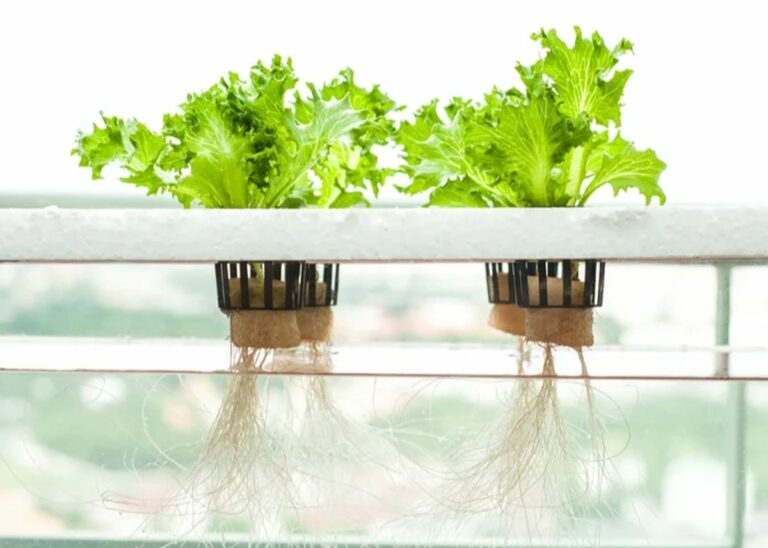
I am introducing the hydroponics growing method to under privileged countries through my non-profit organization. What I need your help with is an issue with moving newly rooted clones in a bubble/DWC system to another clinic, and I wanted to know how long can we keep the air stones off before there is damage to the plants? I am fairly new to this type of growing....
Also, I am asking people to grow their own produce in an under-developed country that does not have resources for good, water soluble nutrients. So what can we use organically for nutrients? Micro and macro-organisms? N-P-K? Thank you, and I know that a LOT of people will benefit from your help.
Answer: Lovie- Most plants will tolerate several hours in standing water. This is especially true if the water has been well oxygenated (by an air stone) before transport. In fact, I used to take clones and place 3 or 4 of them in the top of a half gallon milk jug with no air bubbler. My success rate was nearly 100%, in spite of the fact that the clones were usually in there for over a week.
I have written many pages on how to produce nutrients (for organic gardens as well as hydroponics) in countries where purchasing them is not an easy option. Below, I will run down a few of these links for your convenience....
Hydroponic Nutrients in Vietnam On this page I talk about using compost tea, aged manure, green cover crops like Alfalfa hay, seaweed and kelp meal.
Homemade Hydroponic Nutrients For this guy in India, I touch on some difficulties with making your own fertilizer recipe. These include avoiding a nutrient deficiency, trying to gauge nutrient strength, and trying to keep the pH of your nutrient solution right. I again discuss compost tea and seaweed, this time with more detail on how to actually make good compost tea. I also touch on using wood ash and bat guano for Phosphorus, and on using worm castings. I do not spend enough time on worm castings....keeping worms can be done easily anywhere in the world, and provides a constant and high quality supply of "worm manure", which contains good amounts of readily available Nitrogen, Phosphorus, and Potassium, and which will never burn your plants.
Worm Casting Tea Supplement On this page, you can find more information on using worm castings, as well as information on a couple of products that include worm castings as a major ingredient. These kind of organic teas are made of worm castings and bat guano, and can be duplicated using worm castings and aged manure from any number of animals.
Hydroponics in Koh Samui Thailand In this page, I make a few interesting points on crop selection for remote gardens that make their own fertilizer, and I also mention compost tea once again.
These are a great place to start for the kind of operation you are interested in running. Unfortunately, I can only give you general rules and recipes, because so many factors will be different for each location you will be setting up. However, no matter where you set up, you will always be able to make some kind of high quality compost from local materials. Most locations, particularly in agricultural areas in under-developed nations, also have access to animal manures and/or Alfalfa hay.
Finally, no matter where you decide to set up, if the area is temperate enough to support crop growth it is also temperate enough to support a small worm farm (which can be made with cheap plastic containers). Between these things, and the use of other local materials (and with a little experimentation) you should have a solid starting point to get your projects on their feet. Good luck, and Happy Growing!
Click here to read or post comments.
Join in and write your own page! It's easy to do. How?
Simply click here to return to Hydroponic Nutrients Q&A.
|
|


Jason is voting for Ron Paul for President in 2012!


|