Hydroponic Vegatables in a Two Story Metal Building
by Gary Byrd
(Asheville, NC...USA)
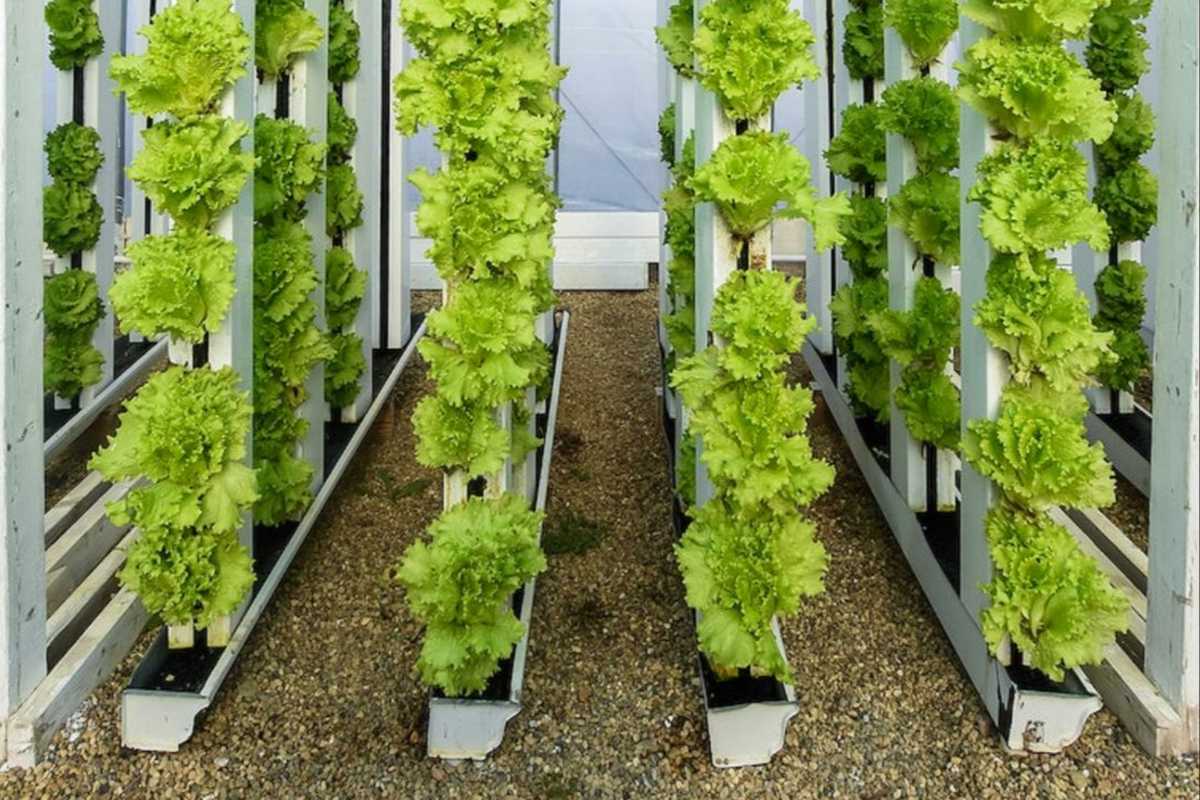
I work for an agency that provides services for folks with disabilities. We have a 5000 s.f. , two story metal warehouse attached to the back of our offices. We are in downtown Asheville NC and are trying to create an indoor/urban, vegetable/flower production facility in 2500 s.f of unused space. We plan to have a partial second floor for flowers and will have 8 3'x 12' skylights in addition to 13 HPS, 600 W lights. We are purchasing a 2012 NFT system and 2-210 vine crop systems from AMHYDRO in CA. We are working with Fifth Season here in Asheville for tech support and have a team of design professional including architect and an engineer.
Just curious if you've ever heard of a retro-fit of this type, and if so what are some of the problems I should anticipate? We have an existing HVAC system that will provide constant temperature controls and the space will be self enclosed from the rest of the space, totally contained. I also have 6, 8' fluorescent fixtures which I plan to utilize also. Any input would be helpful, 20 foot ceilings and lots of space for all elements. Thanks in advance....I've been researching the web for months and have not found any info on this type of use for a metal building.
Answer: Gary- sounds like a great project! I don't have any personal experience with a retrofit of exactly this type, but after gardening indoors for 15 years I have a pretty good idea of what you will be up against. You will definitely want to figure out exactly what crops you are growing and design the space accordingly....very important!
I say this because plants like lettuce, herbs, and spinach produce edible parts while in the vegetative stage. They require a 50% strength vegetative (high Nitrogen) nutrient solution. There is never any reason to feed them a bloom fertilizer OR expose them to a 12-12 light cycle. Many other vegetables, on the other hand, DO require a 12 hour dark period to induce fruiting. Obviously, you cannot have plants that require a dark period growing under skylights unless you have some way of blacking them out completely (or unless you are happy with growing only one crop a year under the natural outdoor photo period).
If you do not have any way to black out the skylights, and you plan on producing year round, than you may consider setting up the spinach, herbs, and lettuce in the area receiving the most light from the skylights. I hope you are planning on growing these type of plants, as many can be harvested after only a couple of weeks of vegetative growth- making them wonderful producers in a community feeding program.
You mention a partial second floor for flowers. No problem if you are selling them as potted plants, but most flowers require a dark period to bloom- so if you are planning on selling these as CUT flowers (to a local florist, for example) you will need a way to provide a dark period to this area as well.
Many flowers and vegetables can be propagated very easily by cloning. Once mature plant (depending on the variety, of course) can yield dozens of clones in just a couple of minutes during one cloning session. The clones, in turn, as two weeks ahead (at least) of any seed-started plants begun at the same time. Also, each clone is genetically identical to the parent, so prize winning plants can be preserved and propagated without worrying about ending up with a plant with slightly different characteristics.
While a vegetative area for all of the big mama plants you want to clone may take up a little room, the trays of little clones themselves take up very little space. A small 10x10 room using those fluorescent lights you have would be capable of warehousing hundreds of clones of all different types as they root. This may not be a great solution for lettuce, but for many other plants it is! And it will save you the expense of purchasing seeds again and again (just make sure you are not cloning a patented variety).
The fluorescents can also be used on the mother plants you plan to take clones from, especially if supplemented with natural light from the skylights. Plants in the veg state require less light to grow properly than plants in the flowering/fruiting stage.
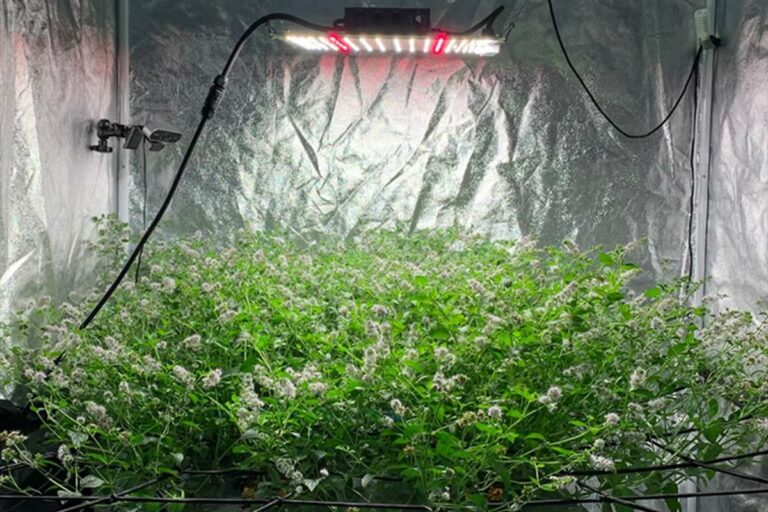
The biggest problems in any well functioning grow room (beyond providing the correct lighting, etc.) is managing the excess heat. This could be a considerable problem in a metal building in North Carolina I suspect. Ideally, your HID lights have glass in the bottom and 6 inch ventilation holes. By drawing air from outside, passing it through a row of lights, and exhausting is back to the outside, you can prevent much of the convection heat from the lights from making it into the air volume inside the warehouse.
The will not be entirely adequate, but it WILL save you considerable money on your air conditioning bill (it is extremely likely you will have to use it- a lot). If you find it is hardly feasible, economically, than you can explore two options. One- insulate the building better, and two- build partition walls around the plant flowering areas to produce a much more confined, targeted area to air condition.
I think that's about all I got on this one. The best of luck on your project Gary....I would love to hear an update when things are a little further along. Until then, Happy Growing!