LED Grow Lights
by Corey Smith
(Salt Lake City)
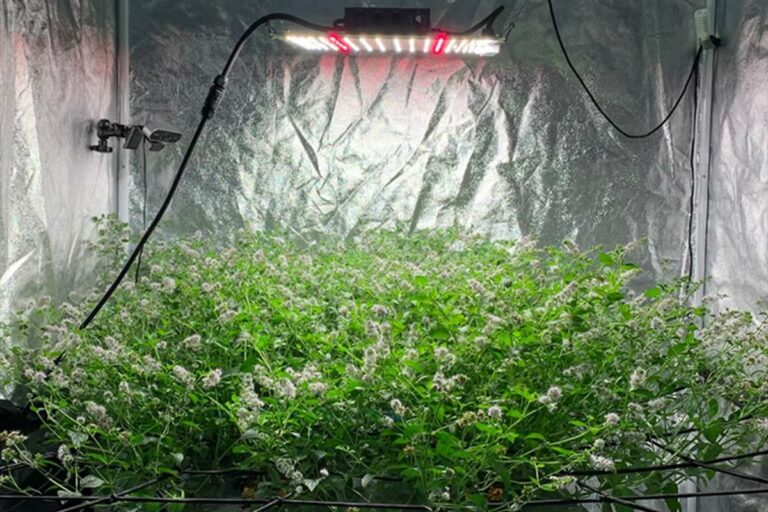
I'm sure you have been asked this question before and I hope you can answer it. I have built your "most successful hydroponic system" and I am using 5- 14w 12"x 12" LED panels. Have you had any experience with LED grow lights? and what are your insights on the matter? Thank you for your time, Corey.
Answer: Corey- most garden plants prefer "full sun"- these plants grow well when given around 40 watts of light per square foot of garden space. The system you refer to is a 4 x 8 foot system....or 32 sq.ft.. Lit at 40 watts per sq.ft., you will need around 1280 watts to properly light your garden area. Ideally, the garden would be lit by two 600 watt lights, but I have also seen it do well under one 1000 watt light on a short light mover.
Unfortunately, your 1 x 1 foot LED panels only emit 15 watts. Even placed side by side directly over the garden, you will only be able to light the garden with a maximum of 15 watts per sq.ft. (if using only the LED panels). And even at that, you will need 32 panels in order to light all 32 square feet of the garden. This will still be short of "ideal" unless you are growing lettuce only.
LED's claim to put out the same amount of light as HID lights. It may be true, but I do not believe LED lights have the "penetrating power" that the same size HID light would have. With a 600 watt HPS, you get a 24 inch effective light zone. With LED lights, the effective light zone is much closer to the bulbs....maybe 8 inches.
If LED lights had the penetrating intensity to sustain a wide (24+ inch) effective light zone, they would be instant and serious competitors to the HID lights for indoor gardening, but so far I have seen no proof of it yet. If they had, I believe LED's would be making a much bigger splash in the gardening market (in spite of their currently expensive prices).
The LED systems only seem more affordable until you consider how many of them you will need to bring a garden area up to 600 Watts or 1000 Watts. In exchange for the high price, they operate without producing nearly the amount of heat HID lights produce. They claim to do this while using less electricity than HID lights. They also last a lot longer than HID lights, supposedly without any loss in light output.
Less electric? Less heat? Less replacement? If you can deal with the higher initial cost, and if you don't mind the ongoing smaller yields, it could be a perfect lighting solution for someone. Happy Growing!