Soil Planting
by Rob Gee
(Queens, NY)
I have a few questions actually. The plant is 3 months old, the humidity levels are normal, and the lighting is fine 6500k fluorescents (dual bulbs), plants 19" tall- I cut the bigger leaves off, is that OK? Which type of nutrients should I use and how much of it. Oh, I'm growing tomato plants...any tips? Should I give more lighting, did I do something wrong by cutting the bigger leaves? Did that stunt their growth? Because one plant is growing taller than the other. Any tips on soil growing please! Thanks a load!
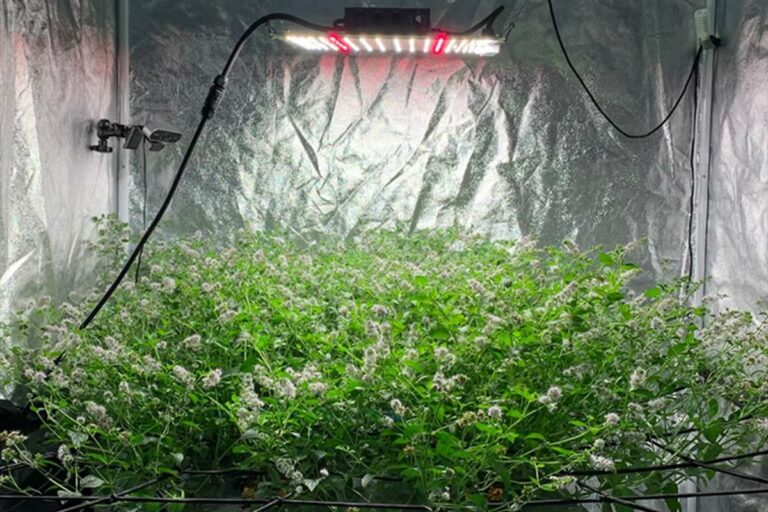
Answer: Rob- let me start with lighting....6500k indicates what color your light is made of, but it does not indicate how STRONG the light is. The strength of a light is measured (most commonly) by the number of watts it takes to power the light. To get a good idea how strong the light is for your plants, you need to divide this number (watts) by the number of square feet you are lighting with it. If you are using a two bulb, four foot long fluorescent light, this normally breaks down to only 10 watts per square foot.
Unfortunately, most garden plants prefer "full sun", which would be a minimum of 40 watts per square foot. Furthermore, fluorescent lights need to be kept within 12 or 14 inches of the plants in order to be effective. If you used 4 two bulb fluorescent light fixtures placed in the shape of a pyramid, this would provide 40 watts per square foot (but would only provide enough growing space for one or two tomato plants).
You could continue to add fluorescent lights to increase your garden area, but you would still need to keep the vegetation within about 14 inches of the lights. The "next step up" from this strategy would be to purchase a 400 watt or 600 watt HPS light. This would give you a greater garden area, and would light that area more effectively (up to 2 1/2 or 3 feet from the light).
With proper lighting in mind, it will be much easier to understand how you should be pruning your plants. Every leaf is like a solar panel, creating food and energy for the plant to grow. As long as the leaves are within the effective light zone, they should be kept on the plant. If you are using fluorescent lights, for example, you should keep all the leaves on the top 14 inches of the plant....leaves below this area can be pruned off.
The vegetation lower down on your plants will not receive enough light to produce good fruits and flowers. The vegetation lower down on the plants will not receive enough light to produce food and energy for the rest of the plant. There is really no good reason to let those leaves keep using up your nutrients. Removing the lower vegetation will let your nutrients move up the plant to vegetation that is receiving better light. Removing the lower vegetation will also help increase air circulation under and around your plants (which is very important).
The only exception to this general guide would be when you "top" a plant. "Topping" is done to stop the upward growth of a plant and encourage it to grow wider instead (or "bush out"). Topping is usually done the first week of the flowering cycle or before. To top a plant, you simply remove about an inch of vegetation from the top-most point on the plant.
If you inadvertently clipped the top off of one of your plants, it might appear as if it's growth were stunted. As I mentioned in the paragraph above, this is not exactly the case. However, if you pruned off too many leaves from the effective light zone, this WOULD in fact stunt the growth of your plant. Depending on how severe the pruning was, the plant should recover within a week or two.
If you have one plant growing taller than the other plants, I would recommend topping the taller plant. It is much easier to light your garden evenly when all the plants in the garden are approximately the same size.
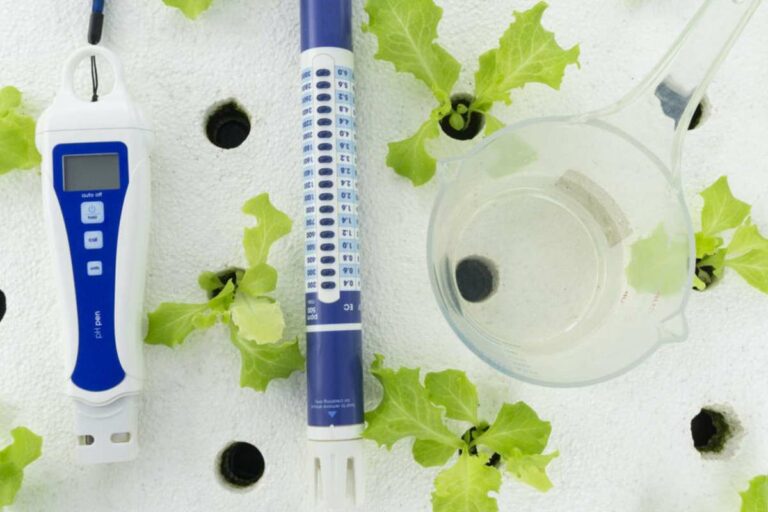
Most garden plants, including tomatoes, are heavy feeding. With most fertilizers, this means feeding your plants "full strength". Ultimately, how strong "full strength" really is will differ from one nutrient to the next. It is always best to use a TDS meter or EC meter to determine how strong the nutrient solution is before using it. If you do not have one, it is best to use 20% less than the "full strength" recommendation on your fertilizer package.
This (above) would be the nutrient strength you would use to FINISH your plants. If they do well, you can experiment with (increase) the nutrient solution strength in your next crop to try to get the best yield. Young plants should be started at 50% of the recommended nutrient strength, and the strength should be increased each week until you arrive at your "finish" nutrient solution strength.
All the advice above assumes there are very few nutrients available in the soil you are using. If you use a high quality, organic soil mix (like Fox Farm), you will want to reduce the strength of the nutrient solution you use to feed your plants. In fact, when a really good soil mix is used you can give your plants plain water for the first three weeks after you transplant them.
My number one piece of advice for soil growers would be to use a high quality soil mix. A good recipe is 1/3 Fox Farm Forrest, 1/3 Fox Farm Ocean, 1/3 perlite, and add enough worm castings to the mix to make up about 5% of the total mix. This is a good "base" recipe that you can customize many different ways....for example, adding kelp meal or bat guano.
Concentrate on the basic nutrients at first. Make sure the fertilizer is highest in Nitrogen for the vegetative state and highest in Phosphorus for the flowering state. Once you have good success with a crop, consider using a nutrient additive to take it to the next level. After 15 years of gardening, there are 3 additives I consider the best....
If you can afford only one other thing, make it vitamin B1 (ie Superthrive). B1 constantly pushes the cell division in your plants, leading to extra growth and yield. A very close second would be liquid seaweed (like MaxiCrop). Using seaweed adds micro-nutrients and plant hormones to your water. Third, include a Silica additive (like Silica Blast). Silica helps the plant create a crystalline matrix in the stems of the plants and increases the immune system of the plants.
When using quality soil and quality fertilizer, it is not necessary to use your additives at the full recommended strength. In fact, you should use only 50% of the recommended strength for your additives. It is particularly important that you DO NOT go over the recommended amount when using a Silica additive. These three additives should be used in EVERY DROP of water you give to your plants, whether or not you are also giving them fertilizer at the time.
These three additives can be used together at the same time (in the same water) without any problem. The only time you would not want to give them to your plants would be if/when you are flushing your plants (the last two weeks of the flowering period). I hope this helps, and Happy Growing!